
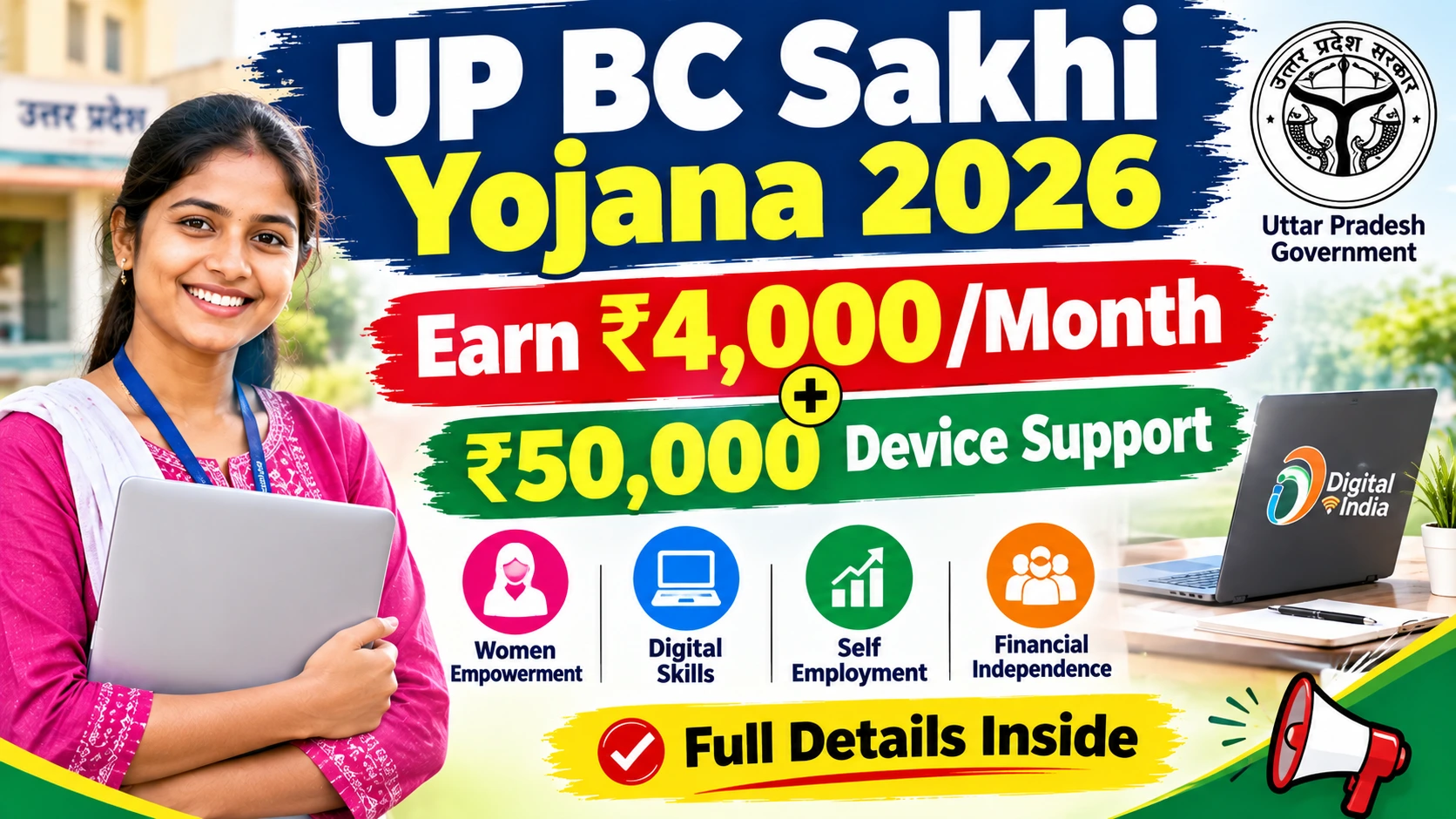
UP BC Sakhi Yojana is a major welfare scheme launched by the Government of Uttar Pradesh for converting the women of rural Self-Help Groups (SHGs) into Banking Correspondents (BCs) of their villages. The scheme was launched in 2020 by the Chief Minister Yogi Adityanath to bridge the gap between rural citizens and formal banking services and develop sustainable livelihood opportunities for women.
Overview of the Scheme Aspect Details
Scheme Name UP BC Sakhi Yojana State Uttar Pradesh
Launched by Uttar Pradesh Government
Launch Year 2020
Primary Beneficiaries: Women SHG members
Key Benefit Stipend ₹4,000/month (6months) + 50,000 devices subsidy + commission income
UP BC Sakhi Yojana What is ?
The initiative trains active female members of Self-Help Groups as Banking Correspondents and assigns them the responsibility of providing essential banking services at the doorstep of villagers. These women are called “BC Sakhis” and they are the direct link between the rural households and the formal banking system.
Main Objectives
The scheme was developed with four main objectives in mind:
Economic Empowerment – Rural women have a secure source of income
Financial Inclusion – Banking Services to Remote Villages
Technical Literacy – Educating rural communities about digital transactions
Self Reliance – Empowering women to become financially independent entrepreneurs
Financial Benefits for Sakhis in BC
Successful candidates receive a comprehensive support package:
Benefit Component Amount/Details
Monthly Stipend Rupees 4,000/- per month for the first 6 months
Device/Equipment Subsidy ₹50,000 from bank
Commission Income Earnings from each transaction handled on a continuous basis
This combination makes sure that BC Sakhis will have financial stability during their initial training period while creating a long-term stream of income through transaction commissions.
Eligibility & Requirements
The applicants must meet the following conditions:
Age: 18 to 50 years
SHG Membership: Active member of Self Help Group registered under UPSRLM/ NRLM
Qualification: 10th pass or above
Technology: Access to a smartphone or other digital device
Location: Willing to work in her own village as a Banking Correspondent.
Skills: Ability to run basic digital applications and financial transactions
Required documentation
Before applying, prepare the following documents:
Aadhaar
10th Class Certificate
Certificate of SHG Membership in English
Bank Account Passbook with Aadhaar
UP Resident Certificate
Photograph in passport size
Application Process Step-by-Step
Step 1: Open Google Play Store → Search “BC Sakhi” → Download UP Government BC Sakhi App
Step 2: Download the app → Sign up using mobile number → OTP verification
Step 3. Fill in your profile with:
Name (as on Aadhaar)
Details of Gram Panchayat
SHG Details
10th certificate details
Step 4: Submit scans of:
10th certificate
Aadhaar Card –
SHG Member Authentication
Passport Photo
Bank Account Information
Step 5: Submit Application and Get Application ID (Application Number)
Step 6: UPSRLM verification Finalization of Shortlisted Candidates Call for Training
Step 7 Complete Online & offline training → Get certified → Sign MoU with the bank → Get device → Start the deployment
Comparison of BC Sakhi with other Sakhi roles
In Uttar Pradesh, there are different “Sakhi” roles in the SHG ecosystem. Here’s the difference:
Sakhi Type Primary Work Income Structure
BC Sakhi (Bank Sakhi) Doorstep banking services ₹4,000/month + ₹50,000 Device + Commission
Krishi Sakhi Agricultural extension services 60,000-80,000/year
Pashu Sakhi Livestock and veterinary support On commission basis
Drone Didi Agricultural Field Spraying Drones ₹15,000/month
Bima Sakhi (LIC) Insurance policy sales ₹7,000 per month (Year 1) + Commission
Why This Plan Is Important
UP BC Sakhi Yojana is a double impact intervention. On one hand, it aims to find a solution to the chronic shortage of banking infrastructure in rural Uttar Pradesh, by establishing a network of trained female banking correspondents. On the other, it provides a dignified, skill-based livelihood for women from SHGs, and places them as trusted financial intermediaries in their own communities.
The scheme is a step toward promoting gender empowerment and rural financial inclusion, which are two important pillars of inclusive growth, with women at the center of financial service delivery.